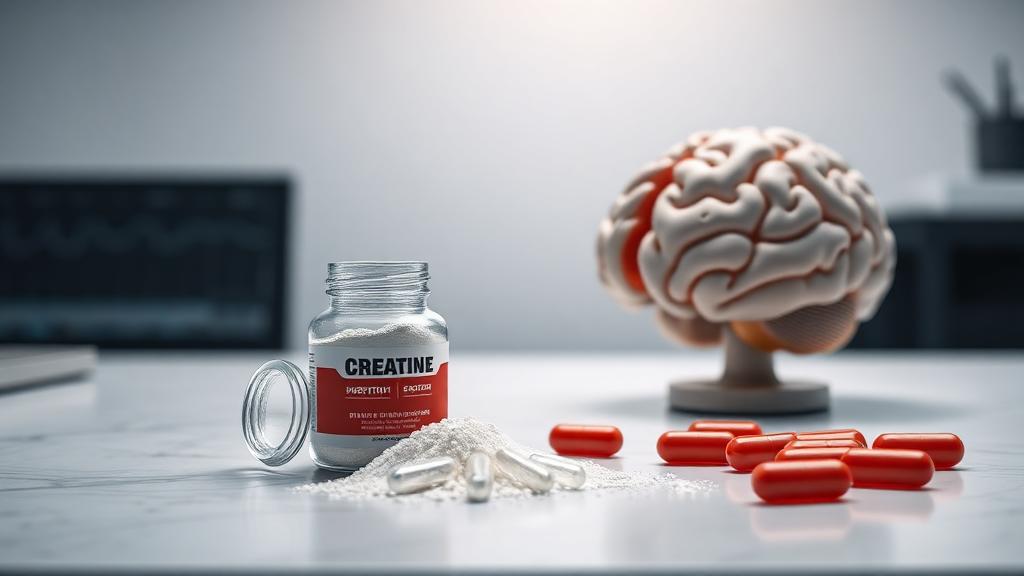
Creatine beyond muscle: strength, brain, and performance
Creatine is, without exaggeration, the most studied and evidence-backed ergogenic supplement in sports nutrition history. With over 500 published studies, creatine monohydrate has consistently demonstrated benefits extending far beyond muscular performance. However, persistent myths prevent many people from benefiting from this safe and effective nutrient.
The ISSN Position Stand (2017): the definitive review
The International Society of Sports Nutrition Position Stand, published by Kreider et al. (2017), is the most comprehensive creatine review ever conducted. Key findings:
- Creatine is the most effective nutritional ergogenic supplement currently available for athletes
- Increases strength by 8-14% in high-intensity exercises
- Accelerates muscle mass gains by 1-2kg additional in the first weeks of training
- Has an excellent safety profile in long-term studies (up to 5 years)
- Emerging cognitive benefits, especially under stress conditions
How creatine works: the ATP-PCr system
1. ATP is the universal energy currency of cells. During high-intensity exercise, ATP is consumed rapidly — muscle stores last only 2-5 seconds.
2. Phosphocreatine (PCr) serves as an immediate energy reserve, donating its phosphate group to regenerate ATP, sustaining intense exercise for 8-12 additional seconds.
3. Creatine supplementation increases muscle PCr stores by 20-40%, allowing more reps before fatigue, greater sprint power, faster recovery between sets, and greater total training volume.
Muscular and performance benefits
Strength and power:
- 8-14% increase in 1RM
- 5-15% improvement in repeated sprint power
- Greater training volume per session
Hypertrophy:
- Additional 1-2kg lean mass gains in the first 4-12 weeks
- Primary mechanism: greater training volume → greater hypertrophic stimulus
- Secondary mechanism: creatine may directly stimulate anabolic pathways (mTOR, IGF-1)
Recovery:
- Reduced muscle damage and post-exercise inflammation
- Less strength loss in days following intense training
- May reduce muscle injury risk by 30-50%
Creatine and the brain: the emerging frontier
The brain consumes ~20% of total body energy and, like muscles, uses the ATP-PCr system:
- Avgerinos et al. (2018): Meta-analysis showed creatine supplementation improves short-term memory and reasoning, especially under stress, sleep deprivation, and aging
- McMorris et al. (2007): 5g/day for 7 days significantly improved cognitive performance during sleep deprivation
- Rae et al. (2003): 5g/day for 6 weeks improved fluid intelligence and working memory in vegetarians
Implications for executives:
- Creatine supplementation can benefit even those who don't train intensely
- 5g/day may improve decision-making under pressure and fatigue
- Vegetarians and vegans benefit particularly (20-30% lower baseline stores)
Evidence-based supplementation protocol
Standard dose (current recommendation):
- 3-5g/day creatine monohydrate, every day
- No loading phase needed — while loading (20g/day for 5-7 days) saturates stores faster, daily 3-5g reaches the same result in ~28 days
- Can be taken at any time of day, with or without food
For strength athletes: 5g/day post-workout with a meal containing carbs and protein
For executives/cognitive focus: 5g/day regardless of training
Myths debunked by science
"Creatine causes hair loss" — Based on ONE study (van der Merwe et al., 2009) with 20 rugby players. Never replicated in 500+ subsequent studies. The ISSN concludes: no causal evidence.
"Creatine overloads kidneys" — Studies up to 5 years with 5-10g/day show no alteration in renal function in healthy individuals. Serum creatinine may rise slightly (normal metabolic byproduct), but this does not indicate renal damage.
"You need to cycle creatine" — No scientific basis. Cycling means periodically losing benefits without gaining anything.
"Creatine is a steroid/doping" — Creatine is a nutrient naturally found in meats and fish. Not banned by ANY anti-doping organization (WADA, USADA, IOC).
Which creatine to buy?
- Creatine monohydrate is the most studied form with best cost-benefit
- "Premium" forms (HCl, buffered, Kre-Alkalyn) haven't shown superiority in controlled studies
- Look for purity certification: Creapure® (made in Germany) is the gold standard
Conclusion
Creatine is possibly the supplement with the best cost-benefit-safety ratio in sports nutrition. With over 500 studies demonstrating efficacy and safety, benefits extend from muscular performance to cognition. A dose of 3-5g/day creatine monohydrate, continuously, is recommended for athletes and can significantly benefit professionals seeking cognitive performance under pressure.
Creatine supplementation individualization is a fundamental part of my clinical protocols.
Scientific References
Murilo Toscano · CRN-6 26497 · About the author ·